|
▲
The 3:25 Club
INTO THE CLOSE
LEAD · LESSON · THETA
| |||
|
Time decay eats every option alive. On a butterfly, that's the whole point.
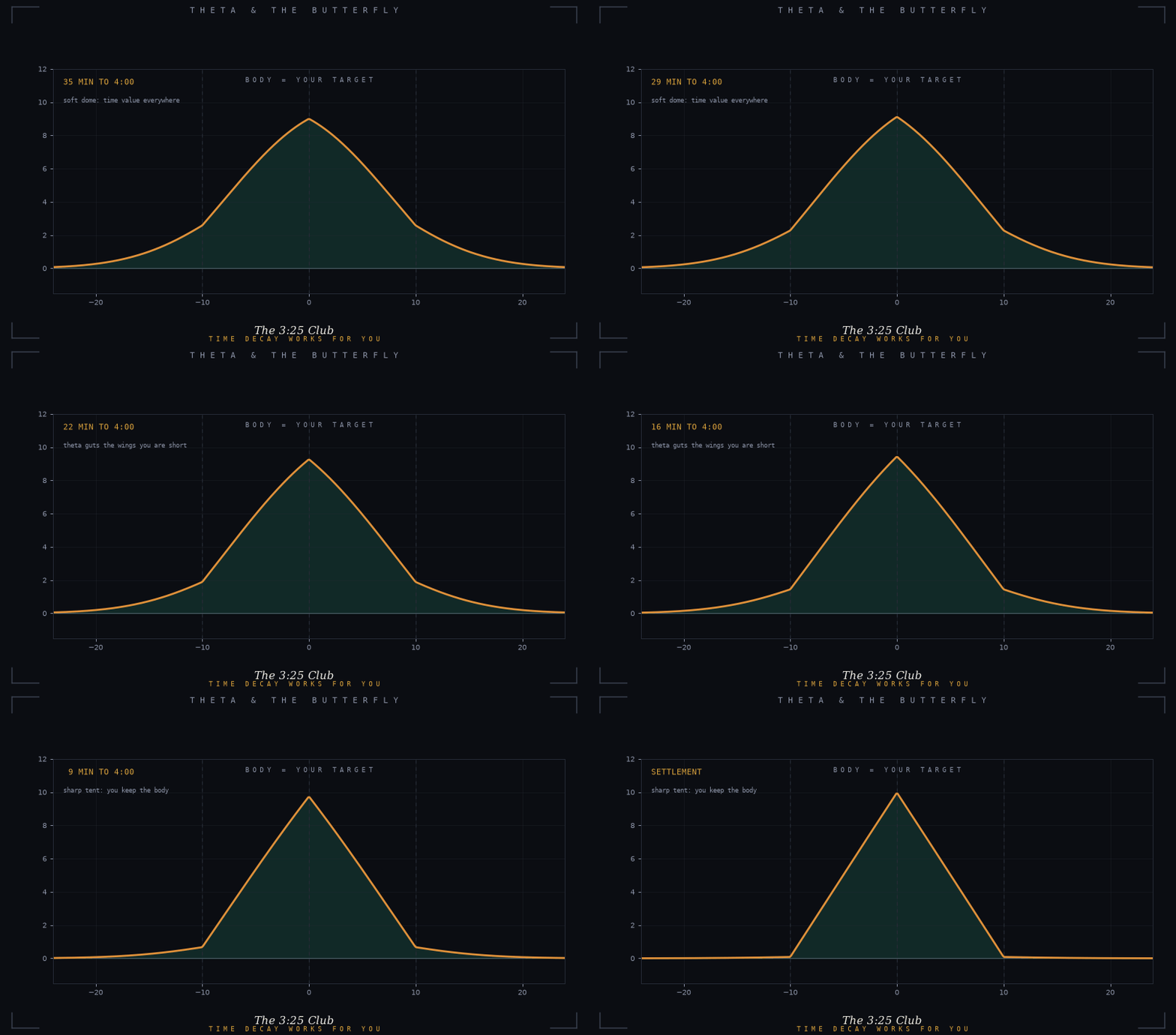
Here's something I figured out trading these, not something I read in a book. Everybody teaches time decay as the enemy. Buy an option, sit there, watch it bleed a little every hour the market doesn't move. That's true, and for most option buyers it's a slow leak. Traders call it theta: the value an option loses just because the clock is running, and it runs fastest in the final hour. Now flip it. What if the thing decaying is a trade you built to decay? A butterfly is one option bought, two sold at the body, one bought. You are a buyer AND a seller in the same trade. So theta isn't just working against you, it's working for you on the two you sold. And that's the part nobody points at: as the clock runs to 4:00, the wings you're short melt to nothing, and if price is parked near your body, the tent sharpens up right where you want it. Watch what happens to the fly's value as the day burns down:
Early in the day it's a soft dome. There's time value smeared everywhere, even out past the wings, because with hours left anything can still happen. That soft dome is expensive. Buy the fly at 9:30 and you're paying for all that maybe. By 3:25 the dome has collapsed toward a sharp tent. Theta gutted the far strikes. The wings you'd be short are nearly worthless, so the whole structure got cheap. But here's the thing most people miss: the strikes near your target still hold real value, even with 35 minutes left. I've watched a strike a few points from the money still carry three or four dollars of value into the last half hour, especially on a jumpy tape, because a real move is still possible in minutes. The body stays alive while the wings die. That is the entire reason the desk trades the fly at 3:25 and not a minute before. You want the cheap tent, not the expensive dome. You're buying after theta has done your discount shopping for you, into a window where the body still has pin potential and the afternoon has already shown its hand. And because the fly got so cheap, the math gets silly. Risk a hundred bucks on a structure that pays four hundred on a pin. That's not a better guess than buying a call. It's the same right guess bought at a fraction of the price, because you let the clock crush the cost first. So when a recap says "theta was on our side into the close," now you know it's not a figure of speech. We built the trade so the clock is a teammate. Into the close, P.S. This is also why we're strict about the exit. A fly is a coiled spring in the last 35 minutes: theta sharpens it fast, but a move away from the body unwinds it just as fast. Cheap to own, but it demands you respect the clock. That's the next lesson. This course is the free tier of The 3:25 Club. The paid desk posts every trade, entries, exits, wins and losses, as it happens.
| |||
|
DISCLAIMER
The 3:25 Club provides signals and content for EDUCATIONAL and INFORMATIONAL purposes only. Nothing here is financial, investment, legal, or tax advice, and nothing is a recommendation to buy or sell any security. We are not registered investment advisers or broker-dealers. 0DTE options are among the highest-risk instruments available and can lose 100% of the premium paid (and, for credit structures, more than the premium received) in minutes. Past performance (real, simulated, or backtested) does not guarantee future results, and backtested results have inherent limitations. You control your own sizing and are responsible for your own results. Never trade with money you cannot afford to lose. |
|
The 3:25 Club
INTO THE CLOSE
You're receiving this because you signed up for The 3:25 Club.
Fullerton, CA · Unsubscribe |