|
▲
The 3:25 Club
INTO THE CLOSE
LEAD · LESSON · GREEKS
| ||||
|
You don't need calculus to trade with the desk.
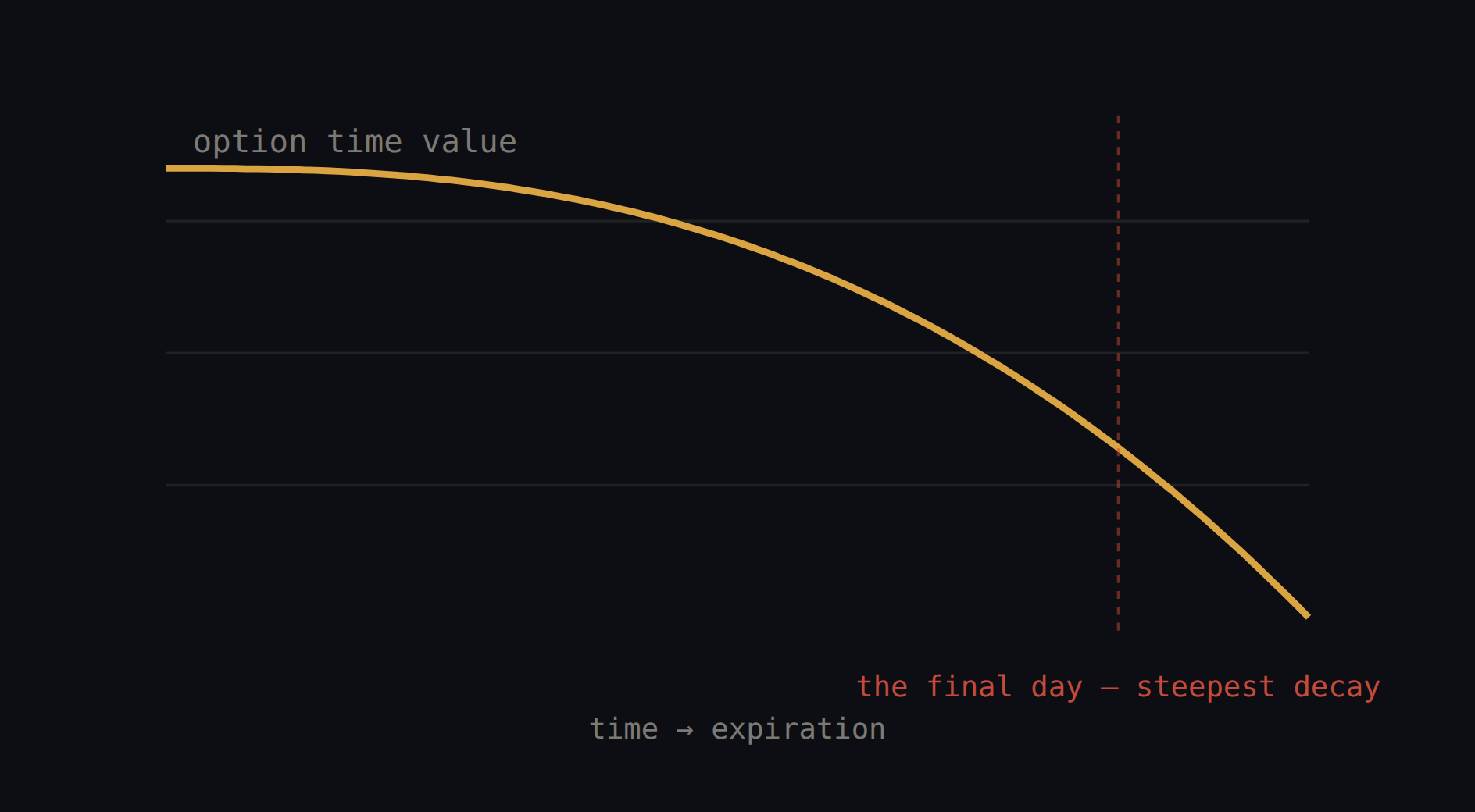
Four Greek words, zero Greek math. They come up constantly, and knowing them turns our recap cards from jargon into something you can actually read. Theta answers: how much value do I lose as time passes? Every option carries value purely because time and movement are still possible. That value bleeds away daily, fastest in the final hours. It's the single most important Greek for what we do, and the whole reason we're called The 3:25 Club: we buy cheap structures late in the day precisely when this decay is steepest.
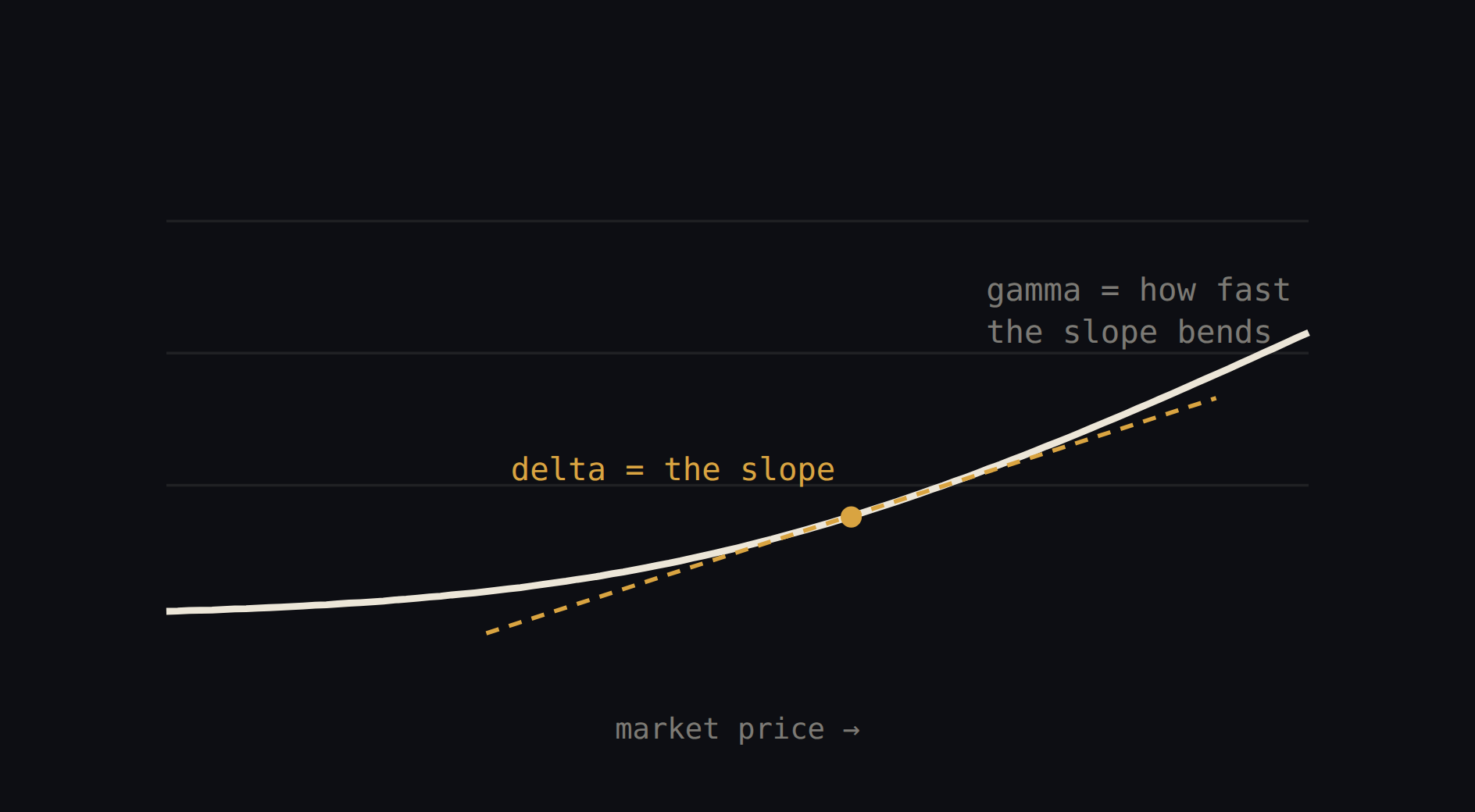
Delta answers: if the market moves $1, how much does my option move? A delta of 0.30 means about 30 cents per market dollar. Your directional exposure, in one number. Gamma answers: how fast does that delta itself change? Near the strike and near expiration, delta swings quickly, which is why 0DTE positions feel so alive in the last hour, and exactly why every desk trade has a pre-planned exit.
Vega answers: how much does fear move my option? When the market gets nervous, all options get more expensive (rising volatility). Vega is how much your position reacts, and why a calm-day condor and a panic-day condor price so differently for the same strikes. You never have to calculate any of these; the bot handles the math. But now, when a recap says "theta was on our side" or "we cut it as gamma spiked into the close," you'll know exactly what happened, and why the rules did what they did. This course is the free tier of The 3:25 Club. The paid desk posts every trade, entries, exits, wins and losses, as it happens.
| ||||
|
DISCLAIMER
The 3:25 Club provides signals and content for EDUCATIONAL and INFORMATIONAL purposes only. Nothing here is financial, investment, legal, or tax advice, and nothing is a recommendation to buy or sell any security. We are not registered investment advisers or broker-dealers. 0DTE options are among the highest-risk instruments available and can lose 100% of the premium paid (and, for credit structures, more than the premium received) in minutes. Past performance (real, simulated, or backtested) does not guarantee future results, and backtested results have inherent limitations. You control your own sizing and are responsible for your own results. Never trade with money you cannot afford to lose. |
|
The 3:25 Club
INTO THE CLOSE
You're receiving this because you signed up for The 3:25 Club.
Fullerton, CA · Unsubscribe |